
Rock Screens for Construction: What They Are, How They Work, and Why They Matter
Construction sites produce a mix of materials like rock, soil, rubble, and debris that can quickly slow down progress. Sorting it takes time, labor, and money, especially when usable and waste materials aren’t separated on-site.
Rock screens for construction help solve this by efficiently separating materials by size. They reduce waste, improve productivity, and keep job sites cleaner.
At RockZone Americas, we’ve seen how the right screening equipment makes a difference. Our Rockscreener is one example of how attachments can simplify material handling.
In this article, we’ll look at what rock screens are, how the screening process works, and where they’re used in construction, mining, and landscaping.
Key Takeaways
- Rock screens help contractors save time and money by turning mixed debris into clean, usable material.
- Choosing the right equipment, from a grizzly rock screen to a compact bucket, ensures precision and long-term reliability on any site.
- Efficient screening keeps projects moving smoothly by separating rocks, improving material quality, and reducing waste.
What Are Rock Screens for Construction?
A rock screen is a type of screening equipment used to separate rocks, soil, and other materials by size. Common on construction projects, these machines allow smaller particles like sand, dirt, or fine gravel to fall through openings while capturing oversized material for removal or further processing.
Rock screens come in different designs, including grizzly bar setups, vibratory screens, trommel drums, and excavator-mounted buckets. Key specifications include screen opening size, deck configuration, and throughput capacity, which determine how effectively the equipment separates different materials.
Built for durability and efficiency, rock screens are used across job sites of all sizes to improve material sorting and reduce waste from mixed or unprocessed loads.
Why Rock Screening Matters on a Job Site
Rock screening is a simple but effective way to improve productivity, reduce waste, and meet tight schedules on active construction projects.
Using rock screening equipment on-site allows crews to remove oversized rocks, lower hauling costs, and speed up material sorting. It also helps produce clean, high-quality materials such as gravel, soil, and sand that are ready for use in road base, fill, or other applications.
For both smaller projects and heavy-duty applications, screening supports greater efficiency, precision, and overall project quality.
Types of Screening Equipment
There are several types of rock screening equipment available, each suited to different projects, industries, and material conditions. The best choice depends on site layout, material quantity, and the level of mobility needed.
Stationary rock screens
Stationary systems, including grizzly rock screens, are built for high-volume operations. These machines are commonly found in quarries and mining sites, where consistent throughput and durability are essential.
Grizzly rock screens rely on heavy-duty steel bars set at fixed spacing, while vibratory screens use powered shaking decks to process high volumes with consistent sizing. Both are built to withstand abrasive material and deliver excellent reliability, though they require significant space and crews, and are not easily relocated.
Portable rock screens
Portable screening machines offer more versatility and are designed for contractors who need to move between job sites. Often mounted on tracks or trailers, these systems can handle a range of material types, from soil and dirt to gravel and construction debris.
Although lighter and more mobile than stationary systems, portable units still require loaders for feeding, making them best suited for medium to large projects with changing or temporary screening needs.
Excavator screening buckets
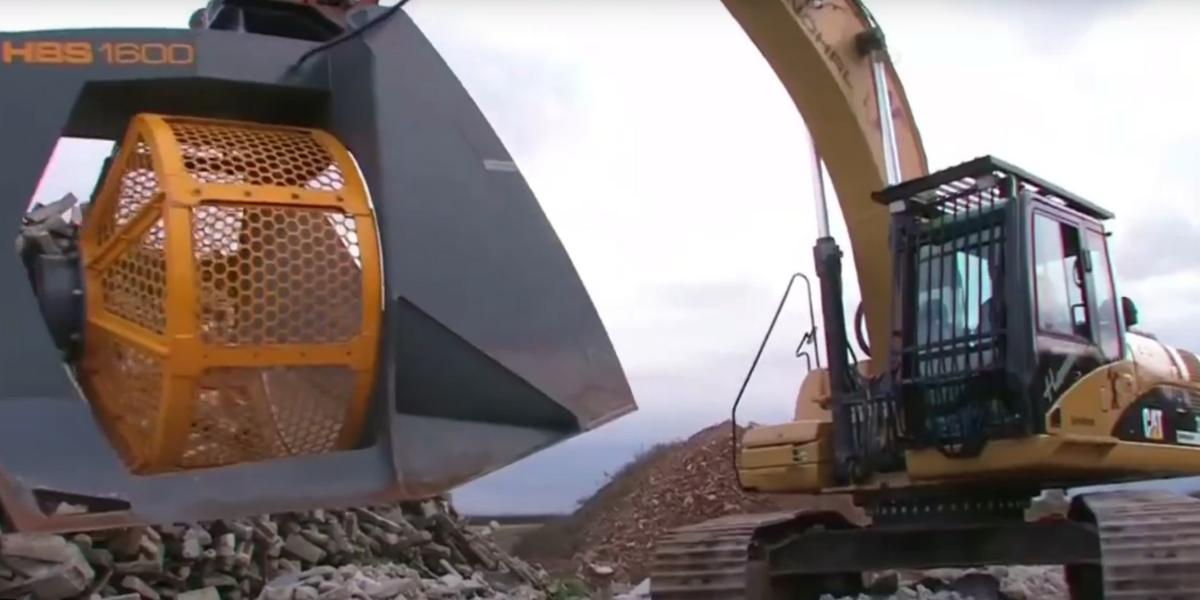
For maximum mobility and on-the-spot material sorting, screening buckets are an increasingly popular solution. These compact attachments mount directly to excavators, allowing operators to sort rocks, remove oversized material, and produce clean stock without moving equipment around the site.
An example of this approach is the Rockscreener, an excavator-mounted bucket that offers precise screening and high efficiency in tight or remote locations. These buckets are well-suited for landscaping, utility work, recycling, and smaller projects where space and time are limited.
Where Rock Screens Shine: Use Cases & Applications
Contractors across multiple industries use rock screens to get cleaner, more consistent material right on-site. Some of the most common applications include:
Land clearing & site prep: Before new work begins, it is crucial to separate soil from roots, rocks, and debris. A compact screening bucket can quickly sort rocks from topsoil, creating clean, sellable stock for immediate reuse or other purposes.
Trenching & backfill: In utility projects, screened material ensures a uniform, compactable fill that won’t be compromised by larger rocks or contaminants. This precise screening prevents delays and helps protect underground infrastructure.
Demolition cleanup: Post-demolition material is often inconsistent. A rock screen allows crews to separate concrete, gravel, dirt, and metal, preparing materials for recycling or safe disposal. The ability to remove oversized rocks makes cleanup faster and more cost-effective.
Recycling & stockpiling: Using screens to process mixed material lets contractors recover aggregate for resale and create efficient stock for future projects. This process adds value while keeping material out of landfills.
Landscaping & grading: For landscaping or finishing work, screens help achieve the right texture and appearance by separating sand, soil, and gravel to exact specifications. The result is smoother finishes and more professional results for clients.
Choosing the Right Rock Screen for Your Job
Not every project has the same material challenges, and the same applies to selecting the best rock screening equipment. The right choice depends on the type of rocks you’re handling, site conditions, and your project requirements.
Material type: Consider whether you’re processing loose soil, fine gravel, or abrasive, larger rocks. Some screens are better suited for lightweight material sorting, while others are built to withstand harsh conditions and heavy impact.
Output size: For precise sizing, match the equipment to the application. Flat-deck and vibratory screens are defined by screen opening size and deck length/width. Trommel-style units rely on screen drum diameter and screen drum depth, which control throughput volume and how efficiently the screen can separate rocks of different sizes.
Job site access: Urban sites or confined areas may require a compact system such as an excavator-mounted bucket. In contrast, quarries or mining operations often use larger grizzly rock screens or vibratory models with higher capacity.
Volume of material: High-output sites demand machines designed to process large quantities efficiently. Models with larger decks, drums, or reinforced frames are better equipped for continuous duty.
Carrier compatibility: For excavator-mounted buckets, always confirm hydraulic flow rate and carrier weight class. For stationary and portable units, ensure loader or excavator access is adequate for feeding material consistently.
Whether you need a versatile screen for landscaping or a heavy-duty option for mining, matching the right design to your site ensures both efficiency and long-term reliability.
A Quick Word on Safety and Maintenance
A rock screen performs best when safety and maintenance are part of daily operation. Operators should wear PPE such as gloves, boots, and eye protection, and carry out quick inspections before use.
Checkpoints include:
- Inspect grids or mesh for wear and damage.
- Look for cracks or fatigue in the frame.
- Remove any debris or buildup from the bucket, deck, or drum.
- On grizzly rock screens, confirm spacing between bars is consistent to properly separate rocks.
- On trommel screens, monitor screen drum diameter and screen drum depth to ensure sizing remains accurate and throughput stays efficient.
Regular servicing also makes a difference. Inspect mesh integrity, tighten fasteners, and check hydraulic or electrical components. Daily cleaning, lubrication, and timely part replacement help maintain durability, versatility, and long-term reliability across various applications.
How RockZone’s Rockscreener Works
The Rockscreener from RockZone Americas is an excavator-mounted screening bucket designed to make the screening process seamless. It uses a rotating screen drum and heavy-duty interchangeable grids to sort material by size right at the point of pickup.
Here’s how it works:
- Load material into the bucket directly from the ground.
- The screen drum diameter and screen drum depth allow smaller material (like sand or fine gravel) to fall through the grids.
- Oversized material stays inside the drum and can be discarded or crushed later.
Unlike larger, standalone screeners that require extra equipment and space, the Rockscreener does it all from the arm of your excavator. This gives you ultimate flexibility, especially in tight spaces or smaller projects where setup time is limited.
Each unit is:
- Equipped with XXL hopper and drum volume for high-throughput jobs.
- Built with a compact frame for better maneuverability in tight areas.
- Engineered for long-term reliability in harsh conditions like demolition zones, mining sites, and uneven terrain.
With models available for a wide range of carrier sizes, the Rockscreener easily integrates into your existing fleet.
Why Contractors Trust Our RockZone Americas Rockscreeners
Piles of rock, soil, and debris can slow crews down, waste space, and drive up costs. Contractors need equipment that can separate rocks, handle various materials, and hold up in tough conditions.
Our Rockscreener delivers exactly that. It streamlines the screening process with high volume capacity and a compact frame that works in tight spaces. Built for long-term reliability, it withstands harsh conditions while staying highly versatile across landscaping, mining, and demolition projects.
Alongside the Rockscreener, we also provide Rockcrushers, Rockwheels, and Soil Mixers, giving contractors complete, efficient systems for material handling.
When downtime and waste aren’t an option, RockZone Americas offers efficiency, durability, and proven results. Call us today to find the right model for your needs.
Conclusion
Efficient screening saves contractors valuable time and keeps projects on track. A good rock screen doesn’t just clear debris. It improves material sorting, reduces waste, and produces consistent results across various materials.
From large grizzly rock screens in quarries to compact solutions on urban job sites, the right equipment ensures precision and long-term reliability. Tools like the RockZone Rockscreener show how versatile attachments can streamline the screening process without adding extra machines.
Across construction, mining, and landscaping, modern screening equipment has become an essential part of getting work done faster and smarter. By choosing durable, efficient systems, crews can separate rocks with confidence and keep projects moving smoothly.
Frequently Asked Questions
How does a rock screener work?
A rock screener sorts material by size using grids, bars, or drums. Smaller particles like soil and sand fall through, while larger rocks stay on top for removal or reuse. This screening process makes material sorting faster and cleaner.
What is a grizzly rock screen?
A grizzly rock screen uses heavy steel bars set at fixed spacing to filter material. Smaller debris passes through, while oversized rocks are held back. It’s a tough, reliable choice for quarries, mining, and other harsh sites.
What is rock screening equipment used for?
Rock screening equipment separates mixed loads into usable sizes. It’s used to process soil, gravel, sand, rubble, and grizzly rock for construction, mining, landscaping, and recycling projects.
Why is the screening process important?
The screening process saves time and cost by reducing hauling and waste. It creates clean stockpiles, removes unwanted debris, and ensures material meets project requirements.
How do rock screens separate rocks of different sizes?
Rock screens use openings of different sizes to separate rocks. Fine soil or sand falls through, while larger rocks are screened out for disposal or crushing.
What is precise screening?
Precise screening means producing consistent, accurate sizes. The right screen ensures gravel, soil, or sand matches project specs, reduces waste, and improves efficiency.