
How to Break Up Hard Soil for Excavation and Site Preparation
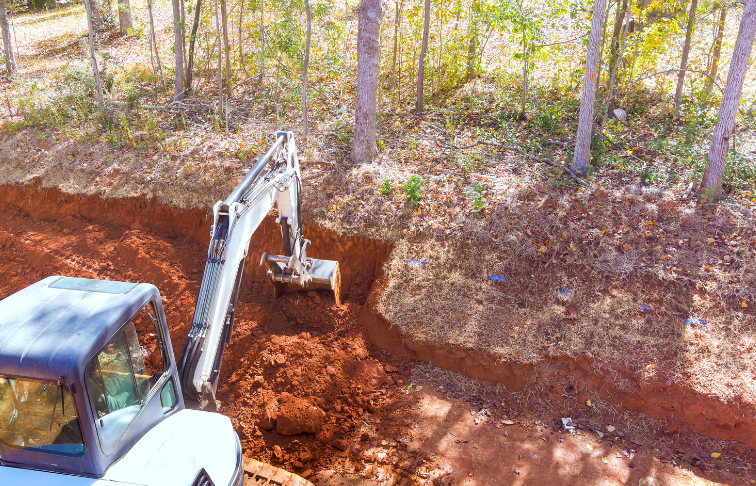
If you’ve ever tried to dig into ground that feels like concrete, you know the frustration. Learning how to break up hard soil is not about brute force. It starts with understanding what is happening below the surface and using the right equipment.
In large-scale construction, site prep, and rock excavation, hard soil can halt progress. Clay soil dries into compacted clay. Compacted soil from vehicle traffic resists penetration. Dense fill and debris create serious resistance during trenching, foundation prep, or subgrade work.
In this guide, we explain what causes hard soil, why standard buckets struggle, and which heavy-duty attachments help you power through tough ground efficiently.
Key Takeaways
- Hard soil problems are driven by compaction, clay behavior, and moisture imbalance, not just surface conditions.
- Standard buckets struggle in dense ground, while purpose-built attachments restore efficiency and control.
- Matching the right equipment to soil conditions keeps excavation productive and prevents long-term structural issues.
What Makes Soil Hard and Difficult to Break Up?
Not all soil behaves the same. Some sites appear workable on the surface but hide deep compaction below, where soil particles are tightly compressed, and airflow is limited. Once soil structure is compromised, hard soil forms in dense layers that resist excavation.
Compacted soil from traffic and construction
One of the most common causes of hard soil is soil compaction from repeated vehicle traffic and heavy equipment. Over time, soil particles are pressed together, eliminating air space and reducing flexibility. This layered compaction can develop across large areas of land, especially on construction staging sites.
In severe cases, even underlying organic matter or organic material becomes compressed into the ground, creating rigid subsurface layers that standard excavation tools struggle to penetrate.
Clay soil and compacted clay
Clay soil presents unique challenges. When saturated with moisture, clay is workable. When it dries, it hardens into compacted clay that can feel like concrete. Heavy clay expands after heavy rain and contracts during dry conditions, leading to poor drainage and long-term drainage issues.
This cycle alters soil structure, creating dense, stubborn layers. Breaking compacted clay often requires more than basic digging methods, especially in large-scale site preparation where heavy clay dominates the profile.
Poor drainage and moisture fluctuations
Poor drainage allows moisture to linger in the ground. Repeated wet and dry cycles change how soil particles bind together. Over time, these fluctuations contribute to compaction and the formation of hard stuff near the surface and in deeper layers.
Without proper drainage planning, soil health declines and excavation becomes increasingly difficult.
Mixed fill and urban ground conditions
Urban and redevelopment sites often contain mixed soil, sand, debris, and buried material. In some areas, organic material, compacted dirt, or residual concrete fragments may be present. These inconsistent layers create unpredictable resistance during excavation.
The result is uneven digging conditions where some sections break easily while others remain compacted and dense, slowing productivity and increasing equipment wear.
Why Standard Excavation Tools Often Fail
Many crews attempt to power through compacted soil using general-purpose buckets. While that approach may work in loose dirt or garden soil, it becomes inefficient in heavy clay and deeply compacted ground.
Limited penetration
When buckets bounce across the surface instead of digging deep, excessive compaction is usually the cause. Hard soil resists entry, increasing cycle times and fuel use while limiting production rates.
Excessive wear
Working in compacted clay or layered fill accelerates wear on bucket teeth and cutting edges. Stress on hydraulic systems increases, especially when operators apply more force to break resistant ground.
Reduced productivity
Without specialized attachments, crews often spend extra time trying to break dense layers manually. Slower trenching, uneven cuts, and rework lead to delays that compound across large projects.
Heavy-Duty Equipment for Breaking Hard Soil
Breaking through hard soil requires purpose-built excavator attachments designed for controlled cutting, crushing, and stabilization. When compacted soil, heavy clay, and layered fill resist penetration, the right equipment makes the difference between steady production and wasted effort.
Drum cutters for controlled cutting
Drum cutters are highly effective for breaking compacted clay soil and dense layers without excessive vibration. Instead of forcing a bucket to dig, rotating drums grind through hard soil with precision, preserving surrounding soil structure while cutting clean trench lines.
They are especially useful for trenching in heavy clay, profiling vertical faces, and working near existing structures where control matters. For dense clay soil conditions, drum cutters provide consistent results with less wear than repeated bucket strikes.
Cutter buckets for combined digging and cutting
Cutter buckets combine excavation and cutting in a single pass. Reinforced edges slice through compacted soil, roots, and mixed debris. On sites where organic matter, sand, clay, and residual fill are blended together, this approach improves productivity and reduces repeated effort.
They are particularly effective when layers vary in density, allowing operators to break through compacted zones while maintaining forward progress.
Soil mixers for stabilization
In some cases, the goal is not just to break soil but to improve it. Soil mixers mechanically blend stabilizing agents such as lime into dense ground. While adding gypsum, compost, peat moss, manure, or fertilizer may be common in garden soil or lawn preparation, large-scale stabilization requires industrial mixing equipment.
Blending binders into heavy clay improves soil structure, reduces compaction, enhances drainage, and increases load-bearing capacity. This process helps address poor drainage and moisture imbalance in demanding site conditions.
Crusher buckets for on-site material processing
When hard soil includes concrete fragments or dense rubble, crusher buckets process that material into reusable aggregate. Instead of hauling debris off-site, crews can break it down and reuse it as engineered fill, saving time and transport costs.
This approach supports efficient land development while minimizing waste and keeping material management on site.
Screening and sorting attachments
Screening buckets separate usable soil from oversized debris, while sorting attachments categorize material by size. On sites where clay, sand, organic material, and mixed fill are present together, these tools streamline processing and reduce unnecessary handling.
Clean separation improves compaction control and prepares the ground for further excavation or stabilization.
Breaking vs Stabilizing Soil
Understanding whether to break, remove, or stabilize soil is critical for efficient site preparation.
When to break and remove
Physical removal is required during deep trenching, foundation excavation, utility installation, and rock excavation. In these situations, compacted soil and heavy clay must be cut and extracted to reach stable layers.
When to stabilize in place
For subgrade preparation, pad construction, or areas affected by high moisture, stabilization may be the better solution. Instead of removing large volumes of soil, additives are mixed into the ground to strengthen it and improve drainage.
This method reduces hauling costs, improves structural performance, and creates a more stable base without full excavation.
The Impact of Soil Compaction on Structure and Performance
Compacted soil does more than slow excavation. It directly affects long-term structural reliability.
Reduced soil health and drainage
While soil health and plant growth are often discussed in garden settings, the principles apply to construction. When soil particles are tightly compressed, air circulation decreases, and drainage becomes limited. This can contribute to instability under slabs and pavements.
Uneven load distribution
Compaction creates dense layers that do not distribute loads evenly. Over time, this uneven support can affect foundations and surfaces built above.
Moisture retention problems
Compacted clay traps moisture. During dry periods, it hardens; during wet periods, it swells. These cycles lead to movement that can impact structural performance.
Site Preparation Best Practices
Proper preparation reduces unnecessary effort and improves results.
Assess the soil before you dig
Evaluate soil type, moisture levels, and compaction depth before excavation begins. Understanding whether you are dealing with heavy clay, layered fill, or mixed debris informs equipment selection.
Control moisture
Managing moisture content improves penetration. In some conditions, allowing soil to dry slightly may help. In others, stabilization or drainage improvements are necessary.
Match equipment to conditions
Using the right tool reduces wear and increases productivity. A drum cutter performs better in dense clay than repeated bucket strikes. A crusher bucket handles rubble more efficiently than hauling mixed debris away. Selecting attachments based on actual soil conditions keeps projects moving efficiently.
Choosing the Right Approach for Your Project
Every site is different. Clay soil behaves differently than sandy soil. Compacted soil from vehicle traffic requires different handling than layered demolition fill. The key is understanding soil structure and matching the equipment to the job.
Hard soil does not have to slow progress. With the right attachments and a clear strategy, you can dig deep, stabilize effectively, and keep your project on schedule.
How RockZone Americas Powers Through Hard Soil
At RockZone Americas, we provide excavator attachments built for tough ground. When contractors need to break up hard soil in clay soil, dense dirt, or mixed fill, we match the right tool to the soil conditions to improve speed and control.
- Rockwheel Drum Cutters grind through hard soil, heavy clay, and compacted layers with precision and low vibration.
- Rockcrusher Crusher Buckets process concrete and dense debris into reusable aggregate on site.
- Soil Mixers blend stabilizers into clay and dense soil to improve structure and drainage beyond basic methods like adding gypsum, compost, manure, peat, or sand.
- Rockscreener and Rocksorter Attachments separate soil, clay, sand, and organic matter for cleaner material handling.
Our attachments are engineered for durability and productivity in demanding environments. If hard ground is slowing your project, call RockZone Americas today and put the right equipment to work.
Conclusion
Learning how to break up hard soil starts with understanding compaction, clay behavior, and ground conditions. Clay soil, compacted soil, and mixed fill can resist standard excavation methods, but specialized equipment makes the difference.
By using drum cutters, soil mixers, crusher buckets, and screening attachments, contractors can cut through dense ground, improve soil structure, and manage material efficiently.
Tough soil is part of the job. With the right tools and preparation, it does not have to stop you.
Frequently Asked Questions
How do you soften hard compacted soil?
Softening hard soil on a construction site requires mechanical disturbance. Deep compacted soil typically cannot be corrected reliably without ripping, cutting, or grinding to restore workable depth and improve performance.
If stabilization is required, mechanical mixing can incorporate binders to control density, reduce shrink–swell, and improve drainage performance across the site.
How does organic matter affect compacted soil in large-scale land development?
Buried organic matter can decompose unevenly under structural loads, leading to voids and long-term settlement. This is especially important in previously undeveloped land or fill areas.
Identifying and removing or properly managing organic layers during excavation helps prevent structural instability and creates a more uniform, reliable base for construction.
How can improving soil structure reduce long-term ground movement?
Overly compacted layers restrict drainage and trap moisture, particularly in fine-grained soils. This can increase shrink–swell cycles and contribute to ground movement over time.
By breaking dense zones and selectively stabilizing where needed, contractors create more consistent support conditions that reduce long-term movement and structural risk.